UK launches world's first AI biosecurity lab to fight disease and biological threats
The UK government is putting £100 million into a new AI Biosecurity Lab, with OpenAI and Anthropic pledging up to £200 million more — aiming to spot outbreaks earlier and speed up new vaccines and treatments.
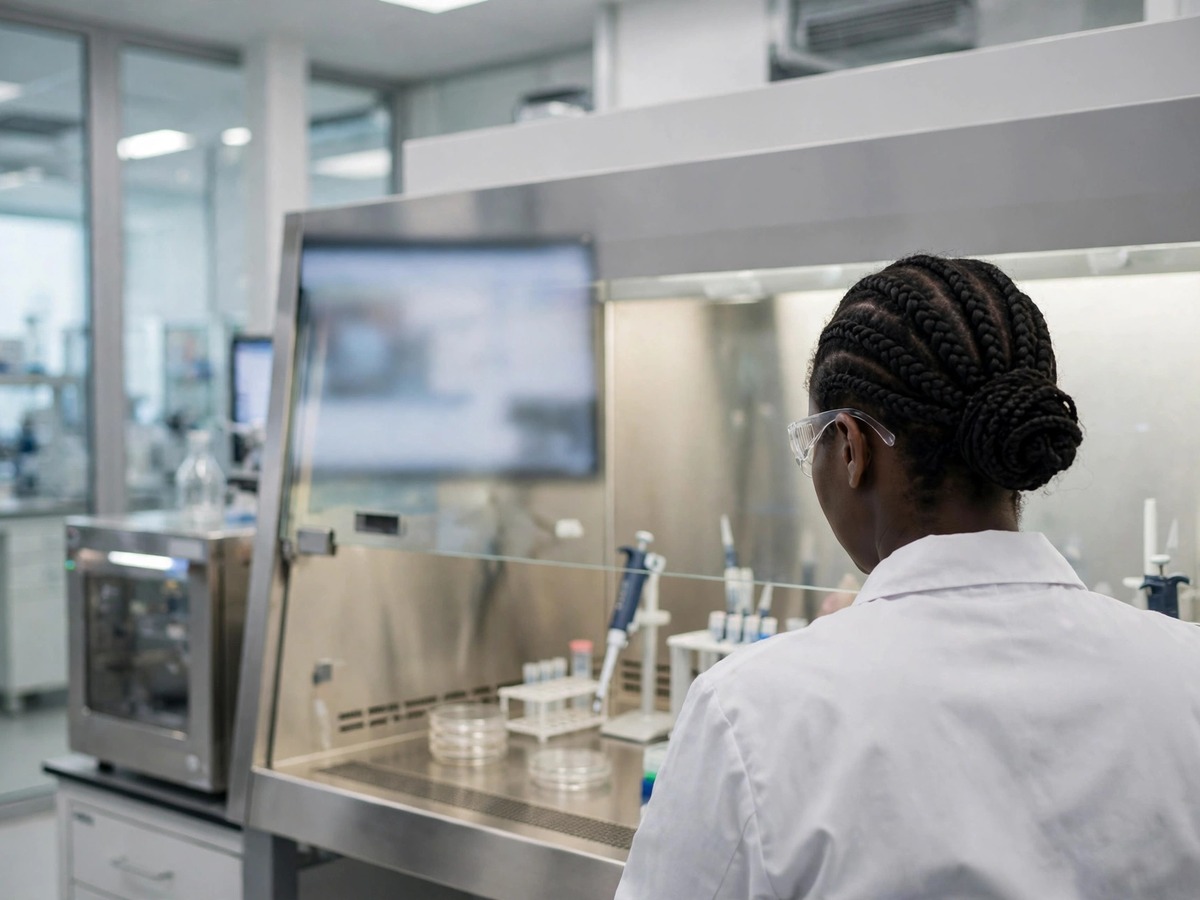
The United Kingdom has announced a new AI Biosecurity Lab (AIBL) — the world's first organisation dedicated entirely to using artificial intelligence (AI) to fight biological threats. The lab will be an independent, non-profit organisation, run as part of the UK's National AI Biosecurity Initiative.
The government is putting £100 million into the lab. On top of that, two major AI companies have pledged up to £200 million more — not cash, but credits to use their models and trusted access: OpenAI will provide £100 million in compute and model credits, plus access to its most capable relevant models through its Rosalind Biodefense programme; Anthropic will provide up to £100 million in model credits, trusted model access and dedicated technical support. Google DeepMind and UK company Basecamp Research will also partner on research and AI life-science tools.
The lab's first job will be two things: detecting new biological threats earlier, and speeding up the discovery, development and testing of vaccines, treatments and other medical countermeasures. It will work with UK government bodies — the UK Health Security Agency (UKHSA), the Animal and Plant Health Agency (APHA) and the Defence Science and Technology Laboratory (Dstl) — plus the medicines regulator (MHRA) to prepare for health emergencies and inform the regulation of AI-designed medicines.
The UK's AI minister, Kanishka Narayan, said the aim is for the lab to become a major global institution "bringing together world-leading scientific expertise to protect people from emerging biological threats".
The lab is part of a wider package of around £600 million (about $800 million) aimed at AI-related health, cyber and security risks. The package includes a further £65 million to develop countermeasures against pathogens, £120 million more for the AI Security Institute, and £130 million for cyber defences — including a "National Cyber Shield" and a new centre to hunt for weaknesses in critical infrastructure. There is also £60 million for UK companies using AI in robotics and manufacturing, £60 million for AI research and procurement, and £15 million for a prize for AI solutions to public policy problems, starting with healthcare.
The lab is still being set up — no opening date or location has been announced, and full details are expected in the government's Wednesday Budget. But its message is clear: governments are starting to use AI itself as a weapon against the risks AI brings.
This connects directly to East Africa. This very week, Kenya reported a second Ebola death: a 65-year-old woman who was a close relative of the first patient. According to Reuters, the outbreak — which started in the Democratic Republic of Congo — has now reached four countries, the widest spread of any Ebola outbreak on the continent. In Congo alone, nearly 10,000 people have been infected and more than 4,600 have died, and this rare Ebola species has no approved treatment or vaccine. The UK government says the new lab's tools will enable "the UK and the world to respond faster to disease outbreaks" — and that is where its value for East Africa lies.
What does this mean for you?
Health workers: AI that spots outbreaks earlier and speeds up vaccines is good news for your work. But this lab is in the UK — the benefit for East Africa will come through shared research, guidance and tools, not overnight.
Parents and families: When an outbreak like Ebola appears nearby, the speed of detection and response is everything. This news shows the world is investing in spotting diseases earlier — but still follow health ministry guidance, not online rumours, when an outbreak happens.
Students and researchers: The "AI + biology" field is growing fast and has big money behind it. If you study science, health or computing, skills that combine AI with life science will be very valuable in the years ahead.
Small business: Part of the package is AI-driven cyber defence — a reminder that cyberattacks are rising. Keep your software updated, use strong passwords, and don't click suspicious links in business emails.
More stories
AfDB and UNDP move Africa's $10 billion AI plan from launch to delivery
The initiative launched at the Nairobi AI Forum in February 2026 now moves into five pilot countries, aiming to help create 25 million new jobs by 2035.

South Korea lends $170 million to build an AI training centre in Tanzania
The agreement signed in Dar es Salaam on Wednesday will build the first centre of its kind in East Africa — teaching AI, robotics, data analytics and the Internet of Things.

East African ministers approve regional AI strategy and university AI module
Ministers of the East African Community have approved a shared AI strategy and a university AI module at the Kampala meeting that ended on October 31 — but implementation still has no deadline or new funding.